Why does the same drain keep blocking?
A recurring blockage can mean that material is continuing to enter the drain, a previous obstruction was only partly removed, or an underlying pipe defect remains. Common causes include:
- Fats, oils and grease: deposits can accumulate inside kitchen drainage and trap other waste.
- Wipes and foreign objects: unsuitable materials can obstruct toilets and sewer lines.
- Tree roots: roots can enter through cracks or faulty joints and restrict flow.
- Damaged or displaced pipework: defects can obstruct the line or catch debris.
- Stormwater debris: leaves, sediment and litter can restrict pits and drainage lines.
The symptoms alone cannot confirm the cause. A repeat blockage is a reason to investigate the pipe and its operating conditions.
What should you check before calling a plumber?
Start with observations and existing records. Avoid opening maintenance holes, entering pits or attempting to work on underground drainage.
Identify the affected area
Is the problem limited to one sink or toilet, or are several fixtures backing up? A single affected fixture may indicate a local restriction. Several affected fixtures can point to a shared drainage line. These are clues to help direct the inspection, rather than a diagnosis.
Look for a pattern
Note whether problems follow kitchen peak periods, heavy rainfall, increased occupancy or recent building works. Rain-related symptoms may require assessment of stormwater drainage or possible rainwater entry into wastewater pipes; they do not prove a particular cause.
Review previous callouts
Check which line was cleared, what material was removed and whether a camera inspection was completed. Compare the location and findings across visits. Repeated work on the same section is useful evidence when deciding what to investigate next.
Use this site checklist
- Record the building, level, room and affected fixtures.
- Note slow drainage, gurgling, odours, backups or visible overflow.
- Record the date, weather and site activity when symptoms appeared.
- Find previous job reports, CCTV footage and drainage drawings.
- Identify access restrictions, sensitive areas and suitable work windows.
- Take photos from a safe location, without contacting wastewater.
What can recurring drainage symptoms tell you?
| What you observe |
What it may indicate |
What to ask the plumber to assess |
| One fixture repeatedly drains slowly |
A restriction in the fixture or nearby branch |
The fixture, trap and connected drainage |
| Several fixtures back up together |
A restriction in a shared line |
The connected branch or main drainage line |
| The problem returns after clearing |
Remaining buildup, ongoing waste input or a pipe defect |
Cleaning results and the underlying pipe condition |
| External drainage struggles during rain |
Debris, downstream restriction or a wider system issue |
Pits, connected lines and system performance |
| Wastewater overflows |
An urgent drainage failure |
Immediate containment, clearance and investigation |
How does a CCTV drain inspection help diagnose the cause?
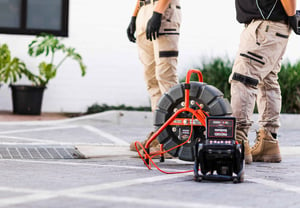
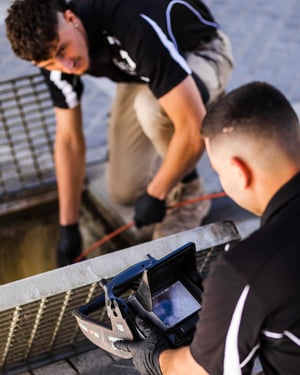
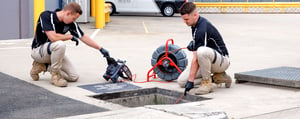
A CCTV drain camera allows a plumber to examine the inside of accessible pipework. It can help identify visible obstructions, root entry, cracks and displaced joints, and document where further investigation or repair is needed.
If wastewater or debris prevents a clear view, the plumber may need to clear or clean the line first and inspect it again. Ask for a post-clearance check so the next recommendation is based on the condition of the pipe after the obstruction has been removed.
CCTV findings need to be interpreted alongside the site's drainage layout and performance. Additional assessment may be needed where access is limited or a suspected issue cannot be confirmed on camera.
JetBlack's hydraulic drainage inspections include CCTV assessment, performance checks and reporting to help customers understand drainage faults.
What should a drain inspection report include?
Ask for a report that explains the findings in a way your team can use:
- The inspected line, access point and extent of the inspection.
- Relevant footage or images showing the obstruction or defect.
- The defect location, where it can be established.
- Any cleaning completed and the result of the follow-up check.
- Inspection limitations or areas requiring further investigation.
- Recommended actions, priorities and repair or maintenance options.
Keep the report with the site's maintenance records so future callouts can build on the findings.
Will clearing the drain stop it blocking again?
Clearing can restore flow and remove accumulated material. It does not necessarily resolve a damaged joint, root entry point or the ongoing disposal of unsuitable waste.
The appropriate response depends on the inspection. It may involve cleaning and changes to waste practices, targeted repairs, or pipe relining where the existing pipe and defect are suitable. Other damage may require replacement. Ask the plumber to explain why the proposed option suits the findings.
JetBlack's blocked drain services combine inspection, drain clearing and follow-up checks, with recommendations for ongoing care.
How can commercial sites reduce repeat blockages?
Match prevention to the confirmed cause. Kitchen teams should keep fats, oils and food scraps out of drains and maintain grease arrestors under the site's servicing arrangements. Bathroom users should keep wipes and other unsuitable items out of toilets. External drainage needs attention to leaves, litter and sediment.
Where stormwater is the concern, review the condition and maintenance of pits and connected lines through stormwater system maintenance.
Use the inspection history to set an appropriate service schedule. A high-use kitchen or a line with known defects may need different attention from a low-use area. JetBlack can support maintenance planning around site usage, drainage condition and operational priorities.