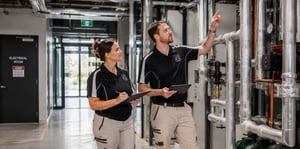
What is preventative plumbing maintenance?
Preventative plumbing maintenance is the scheduled inspection, testing and servicing of plumbing assets to reduce the likelihood of unexpected failures.
Depending on the site, a preventative maintenance program may include:
- Inspecting pipework, valves and fixtures for leaks, corrosion or damage
- Testing thermostatic mixing valves and backflow prevention devices
- Cleaning drains, gutters, downpipes and stormwater systems
- Servicing pumps, hot water systems and associated equipment
- Checking water pressure, temperature and flow
- Inspecting flexible hoses, isolation valves and seals
- Completing CCTV drain inspections where recurring blockages are identified
- Monitoring water usage for signs of concealed leaks
- Recording asset condition and recommended renewal timeframes
The objective is to identify deterioration early and complete repairs under controlled conditions, rather than responding after an asset has failed.
How does preventative plumbing maintenance reduce emergency callouts?
1. It identifies leaks before they cause major damage
Small leaks can remain unnoticed behind walls, beneath floors or in plant rooms. Over time, they can cause significant water damage, mould, higher water bills and damage to surrounding assets.
Routine inspections and water-usage monitoring can identify early warning signs, allowing the source of the leak to be repaired before it becomes an emergency.
2. It reduces the risk of blocked drains and sewer overflows
Drain blockages usually develop gradually as grease, debris, tree roots or other materials build up within the pipework.
Scheduled drain cleaning, CCTV inspections and condition reporting help identify restrictions before they result in overflowing fixtures, unpleasant odours or facility closures.
Sites with commercial kitchens, high public use or recurring drainage issues may benefit from a more frequent maintenance schedule.
3. It keeps pumps and hot water systems operating reliably
Pumps and hot water systems are critical assets for many facilities. A failure can affect bathrooms, kitchens, cleaning services, heating systems and site operations.
Preventative servicing can identify worn components, abnormal temperatures, pressure issues, corrosion and reduced equipment performance. Parts can then be repaired or replaced before the system stops working completely.
4. It helps prevent burst pipes and failed fittings
Corrosion, excessive pressure, ageing flexible hoses and deteriorated fittings can all lead to sudden water releases.
Regular inspections allow these vulnerable components to be identified and replaced as planned maintenance. This is particularly important in older buildings and facilities containing sensitive equipment, high-value assets or occupied spaces.
5. It supports timely asset replacement
Plumbing assets do not always fail without warning. Maintenance records can reveal repeated faults, increasing repair costs or declining performance.
By tracking asset condition and repair history, facility managers can plan renewals before equipment reaches the point of failure. This supports more accurate budgeting and reduces reliance on urgent replacement works.
What are the benefits for facility managers?
A structured preventative plumbing maintenance program can provide:
- Fewer after-hours and emergency callouts
- Reduced disruption to site operations
- Lower risk of water damage and asset loss
- More predictable maintenance expenditure
- Improved plumbing asset reliability
- Better visibility of asset condition
- Improved compliance and record keeping
- Longer service life for maintained equipment
- Clearer planning for future capital works
It can also reduce the time facility teams spend coordinating urgent repairs and responding to complaints from building occupants.
Which plumbing assets should be included?
The right maintenance program will depend on the building type, asset condition, site usage and operational risks. Common inclusions are:
- Hot and warm water systems
- Thermostatic mixing valves
- Backflow prevention devices
- Sewer and trade waste systems
- Stormwater drains, gutters and downpipes
- Sewer and stormwater pumps
- Grease arrestors
- Taps, toilets and other fixtures
- Flexible hoses and isolation valves
- Roof plumbing
- Gas services
- Irrigation systems
- Water meters and leak-monitoring devices
Critical assets and areas with a history of faults should generally receive greater attention or more frequent servicing.
How often should preventative plumbing maintenance be completed?
Maintenance frequency should be based on:
- Legislative and compliance requirements
- Manufacturer recommendations
- Asset type, age and condition
- Building occupancy and usage
- Previous breakdown and repair history
- Site-specific operational risks
- Environmental conditions
- The consequences of asset failure
Some assets require scheduled annual testing, while high-use or high-risk plumbing systems may require monthly, quarterly or six-monthly inspections. A qualified commercial plumbing provider can help develop a schedule suited to the site.
What should a preventative maintenance report include?
A useful maintenance report should give facility managers clear information for decision-making. It should include:
- Assets inspected or serviced
- Tests and maintenance completed
- Identified defects
- Supporting photographs
- Asset condition ratings
- Immediate safety or compliance concerns
- Recommended corrective works
- Repair priorities and timeframes
- Assets approaching end of life
- Completed and outstanding actions
Consistent reporting also helps identify recurring problems across individual buildings or an entire property portfolio.
Preventative maintenance is more cost-effective than emergency response
Emergency plumbing repairs often involve after-hours labour, urgent material procurement, water extraction, cleaning and repairs to surrounding areas. The indirect cost of interrupted operations can be even greater.
Preventative maintenance does not eliminate every unexpected fault, but it significantly reduces avoidable failures. It allows facility managers to address developing problems early, coordinate works around operating requirements and make informed decisions about asset renewal.
Build a proactive plumbing maintenance program with JetBlack Plumbers
JetBlack Plumbers provides planned, preventative and reactive commercial plumbing services for facilities and multi-site property portfolios.
Our team can assess your current plumbing assets, review recurring issues and develop a practical maintenance schedule aligned with your site requirements. Clear reporting and prioritised recommendations provide greater visibility of asset condition and help reduce the risk of disruptive emergency callouts.